
> Eye Care > Eye Treatments > Glaucoma
Glaucoma is a group of eye conditions in which the optic nerve — the vital connection between the eye and the brain — is progressively damaged over time. Glaucoma is one of the leading causes of preventable blindness worldwide, affecting around 2% of people over the age of 40.
Because the peripheral (side) vision is affected first, most people with glaucoma are completely unaware of any visual change until significant damage has already occurred.
This is why regular monitoring by your consultant is not simply recommended — it is essential. Vision lost to glaucoma cannot be restored. The goal of treatment is to preserve the vision you have.
With treatment, most people retain good vision
Regular monitoring is essential
Usually asymptomatic until late in the disease
Early treatment protects your sight

Consultant Ophthalmic Surgeon
MB BCh BAO BMedSc MSc MRCOphth FRCSI(Ophth)

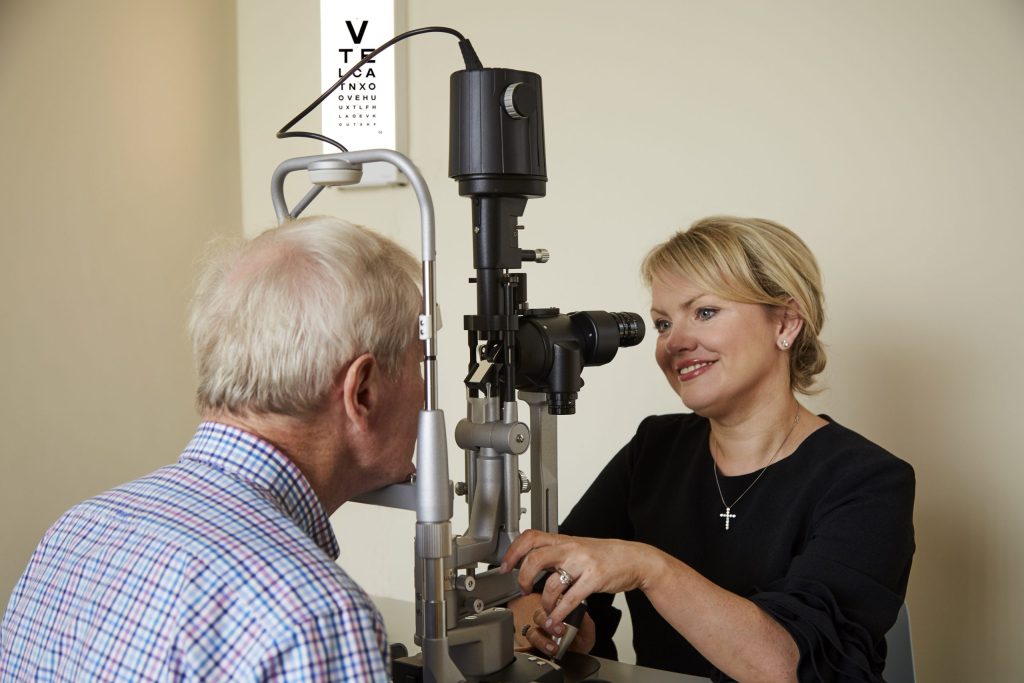
Patients can see Consultant Ophthalmic Surgeon Janice Brady in two ways: directly, by booking a consultation themselves, or through a referral from their GP or optometrist/eye specialist. Once seen, Ms. Brady will assess the patient’s condition and recommend an appropriate course of treatment, whether that involves further monitoring, medical management, or surgical intervention.
Diagnosing glaucoma requires a combination of investigations — no single test is sufficient on its own.
Initial assessment involves Ms Brady going through your previous medical, ophthalmic and family history. Please bring a list of your medications and your glasses with you. We examine your eye and perform specialised investigations such as visual field testing and optic nerve imaging to help with diagnosis. Expect to have dilating drops administered at your first assessment and intermittently thereafter. These blur the vision for a few hours and you are not insured to drive during this time.
The important message
Glaucoma is a serious condition — but it is manageable. Patients who attend regularly, adhere to their treatment, and work in partnership with their consultant over the long term almost always maintain good, functional vision. Those who are lost to follow-up, or who do not use their drops consistently, are at real risk of preventable sight loss. Your appointments matter — please attend every one.
What ‘stable’ means in glaucoma
When your consultant says your glaucoma is ‘stable’, it means there is no detectable worsening of the optic nerve appearance or visual field on serial testing. Stability is the goal of treatment — it means the treatment is working and your vision is being protected. Stability does not mean the glaucoma has gone away; it means it is being successfully controlled.

Eye drops for glaucoma
Eye drops remain the most common first-line treatment for glaucoma. They work either by reducing the amount of fluid produced inside the eye or by improving the drainage of fluid out of the eye — both of which lower eye pressure.
The most important thing to understand about glaucoma drops is that they must be used every day, consistently and correctly. Because glaucoma is painless and silent, there is no symptom to remind you that the drops are working. Missing doses allows pressure to rise and damage to continue.
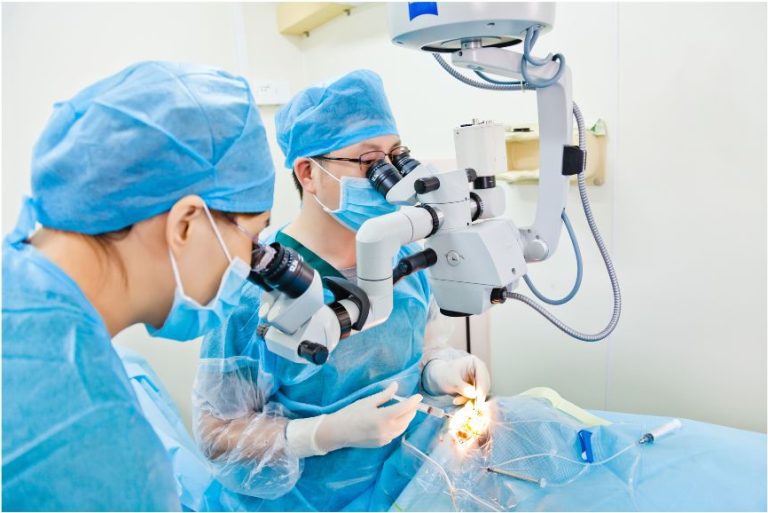
When eye drops and laser treatment are insufficient to control eye pressure adequately, or when glaucoma is advanced and requires a more powerful reduction in pressure, surgery is recommended. Glaucoma surgery creates a new drainage pathway out of the eye, allowing fluid to bypass the blocked natural drainage system and lower pressure reliably. There are a number of different procedures available: the traditional trabecuectomy, tube surgery and well as minimally invasive options such as Preserflo microshunt. Ms Brady will discuss which procedure is most appropriate for your individual circumstances.
There is sometimes a misconception that glaucoma surgery is only considered when all other options have failed and the situation is desperate. In reality, surgery may be recommended at a relatively early stage in patients where drops alone cannot achieve adequate pressure control, where compliance with drops is difficult, or where the target pressure needed to protect the optic nerve is particularly low. Early surgical intervention, when well-timed, can protect vision more effectively than persisting with inadequate medical treatment.

Laser treatments offer an effective way of lowering eye pressure either as an alternative to, or in addition to, eye drops. They are performed in the outpatient clinic under local anaesthetic drops, take only a few minutes, and carry a very low risk profile. For many patients, laser treatment can reduce the burden of daily eye drops or provide a bridge to more definitive surgical treatment.



Managing glaucoma as a long-term condition
A glaucoma diagnosis is lifelong — there is currently no cure, and the need for monitoring does not end once treatment is established. However, the vast majority of people with well-managed glaucoma live full, active lives with excellent functional vision. Managing glaucoma successfully is a partnership between you and your consultant.
Your Journey to Trusted Care Starts Here.
No rush, no pressure – just honest medical advice.

Glaucoma can affect the visual field in ways that may impact on driving fitness. You are legally required to meet the minimum visual field standard for driving and to inform the licensing authority if you have a condition that may affect your vision. Your consultant can advise you on your current visual field status and whether you meet the driving standard. If you are unsure, please ask.

Posted onTrustindex verifies that the original source of the review is Google. The service i received today was exceptional. Dr.Brady was fantastic at explaining, she went above and beyond my expectations.Dr.Brady was extremely kind to me and my farther. As she went into good detail explaing my eyes aswell as farthers. Using great technical terms. Overall Dr. Brady was fantastic.Posted onTrustindex verifies that the original source of the review is Google. Dr. Janice is very welcoming, friendly and professional. She answered all of my questions patiently and with detailed information. I appreciated that she used medical terms during the consultation and then explained the terminology in a simple manner I could comprehend and I am grateful she kindly also used images to further describe various aspects of ophthalmology. I would highly recommend her services and am happy that Dr. Janice was recommended to me by my optician.Posted onTrustindex verifies that the original source of the review is Google. Mr Doris is a fantastic surgeon, totally recommendPosted onTrustindex verifies that the original source of the review is Google. Dr. Janice was patient and thorough, put me at ease and explained every step and every treatment option. Was put at ease by her kind thoughtfulness.Posted onTrustindex verifies that the original source of the review is Google. We’ve had the pleasure of working closely with Eye and Face Clinic Waterford through 2Cubed, and it’s clear why they have such an outstanding reputation. The team there are not only experts in their field but also bring a genuine care and professionalism to every patient interaction. Their approach is thorough, compassionate, and always centred around the patient’s needs. Whether it’s advanced eye care or specialist facial treatments, they combine the very latest techniques with a personal touch that immediately puts people at ease. From our experience, they run their clinic with the same level of dedication and excellence that they bring to their patients – efficient, forward-thinking, and always striving for the best possible results.Posted onTrustindex verifies that the original source of the review is Google. Really enjoyed my first visit to the clinic warm and welcoming reception Gillian is a lovely lady and very passionate about her profession explained treatments that I was interested in can't wait to try the skin pen Katharine CheastyPosted onTrustindex verifies that the original source of the review is Google. Very professional and really helpful would highly recommendPosted onTrustindex verifies that the original source of the review is Google. unfortunately website doesn't workPosted onTrustindex verifies that the original source of the review is Google. The Skin Consultation was excellent, I learned so much about my skin and what products do and don’t work including ingredients to watch out for. I have a totally new skincare regime and already notice a difference after only a couple of weeks. Would definitely recommend for anyone struggling with managing skincare concerns.







Cataract surgery is performed under local anaesthetic eye drops, making it essentially painless. You will be awake throughout and may notice light and movement, but should feel no discomfort. Some mild grittiness or a foreign-body sensation afterwards is normal and usually settles within a day or two.
Most patients notice improvement within 24–48 hours. Vision continues to stabilise over four to six weeks. Some flickering, haloes around lights, or mild haziness in the early weeks is normal and usually settles completely.
This depends on the lens implant chosen. Normally we implant a lens which gives good distance vision but reading glasses will still be required. Your surgeon will advise at your assessment.
In the vast majority of cases the two eyes are operated on separately, typically one to four weeks apart. This allows the first eye to heal and vision to be assessed before proceeding with the second. Your surgeon will advise on timing.
Serious complications are rare. Risks include infection, posterior capsule rupture, retinal detachment, and persistent inflammation. Posterior capsule opacification (a ‘secondary cataract’) can occur months or years later and is easily treated with a quick laser procedure in clinic. Your surgeon will discuss all risks at your assessment.
Intraocular lenses are designed to last a lifetime. Unlike the natural lens, they cannot develop a cataract and do not need replacement or maintenance.
If you experience sudden loss of vision, increasing pain, significant redness, or discharge from the eye, contact our rooms immediately or attend the nearest eye emergency department if outside office hours. Do not wait for your next scheduled review.
You are welcome to contact our rooms directly. Many patients are referred by their GP or optician, but a referral is not always required. If you have been told you may have a cataract, or are experiencing visual difficulty, we would be happy to see you.