
> Eye Care > Eye Treatments > Cataract surgery

Cataract surgery is one of the safest and most commonly performed surgical procedures in the world. A cataract is a clouding of the natural lens inside your eye, causing blurred or dimmed vision. During the procedure, your surgeon gently removes the clouded lens and replaces it with a clear artificial intraocular lens (IOL), restoring sharp, natural vision. The procedure is performed as a day case under local anaesthetic, takes approximately 20–30 minutes, and carries an excellent safety profile with a very high rate of patient satisfaction. Most people notice a dramatic improvement in their vision within days.
20–30 minutes
Hospital – day case
Local anaesthetic (eye drops)
Permanent – lens lasts a lifetime
1-2 Days
1–2 weeks
~2 weeks (vision-dependent)
Within 24–48 hours

Consultant Ophthalmic Surgeon
MB BCh BAO BMedSc MSc MRCOphth FRCSI(Ophth)
Anti wrinkle injections can target common signs of ageing and some medical concerns:
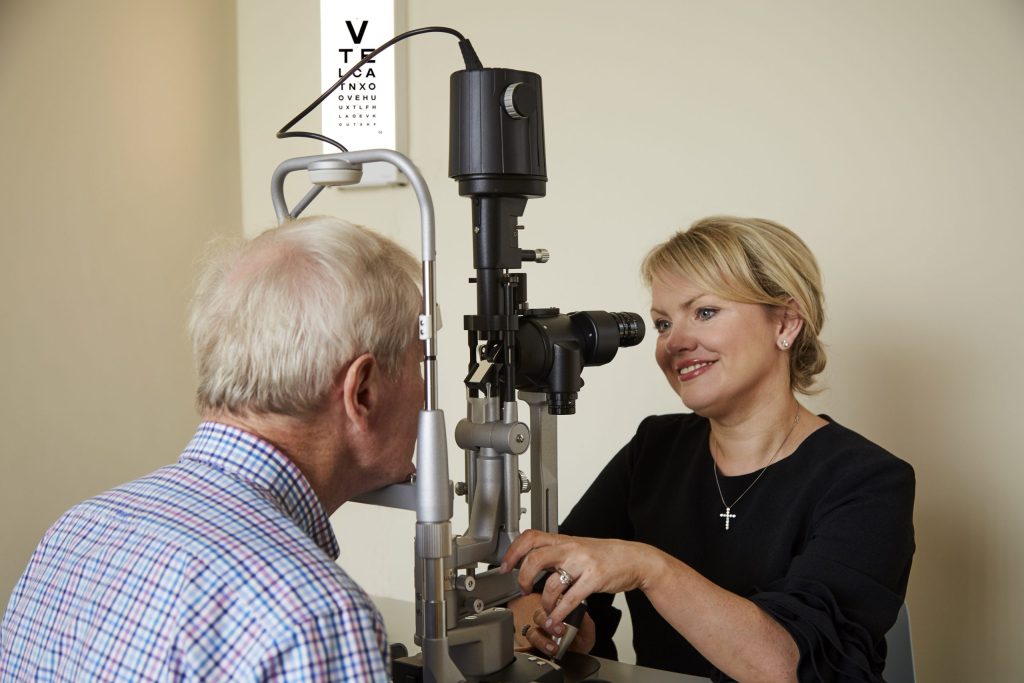
Before any surgery is scheduled, you will be seen in our dedicated assessment clinic by consultant ophthalmologist Mr Doris or Ms Brady. This appointment is thorough and unhurried — we want you to leave feeling fully informed and confident about your care.
During your assessment, the consultant will take a detailed medical and ophthalmic history and carry out a comprehensive examination of both eyes. A series of painless measurements and scans will be performed, including biometry (to calculate the precise power of the artificial lens needed for your eye). These measurements are crucial for selecting the ideal intraocular lens and optimising your visual outcome.
If suitable for surgery, the consultant will explain the procedure to you step by step and you ample time to ask questions.
Please bring a list of your current medications to your appointment, and if you wear glasses, bring these along too. Allow approximately 2 hours for your first visit as your pupils may be dilated, temporarily affecting your near vision and light sensitivity.
Before any surgery is scheduled, you will be seen in our dedicated assessment clinic by consultant ophthalmologist Mr Doris or Ms Brady. This appointment is thorough and unhurried — we want you to leave feeling fully informed and confident about your care.
During your assessment, the consultant will take a detailed medical and ophthalmic history and carry out a comprehensive examination of both eyes. A series of painless measurements and scans will be performed, including biometry (to calculate the precise power of the artificial lens needed for your eye). These measurements are crucial for selecting the ideal intraocular lens and optimising your visual outcome.
If suitable for surgery, the consultant will explain the procedure to you step by step and you ample time to ask questions.
Please bring a list of your current medications to your appointment, and if you wear glasses, bring these along too. Allow approximately 2 hours for your first visit as your pupils may be dilated, temporarily affecting your near vision and light sensitivity.
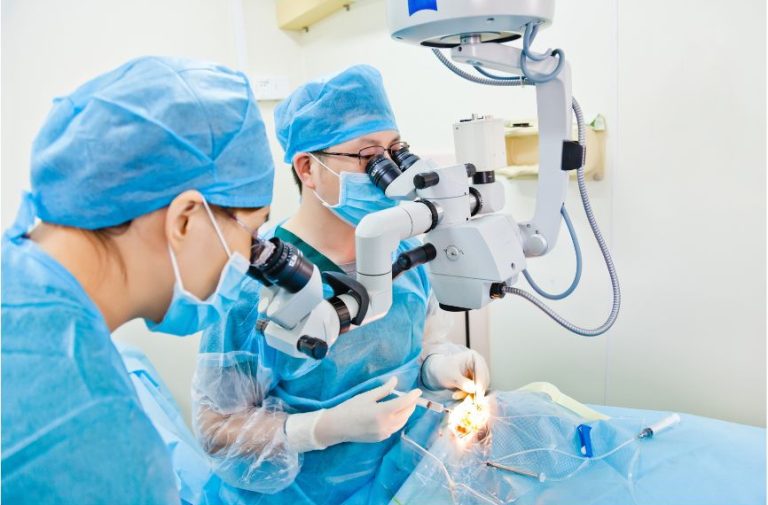
Cataract surgery is performed as a day case, meaning you will arrive, have your procedure, and return home on the same day — there is no overnight stay required. You should arrange for a friend or family member to drive you home, as you will not be able to drive yourself after the procedure.
On arrival, a nurse will prepare you for theatre. Dilating eye drops will be instilled to widen your pupil, and a local anaesthetic will be administered — typically as eye drops alone, meaning there are no injections and no general anaesthetic. You will be awake throughout but will feel no pain. Some patients see flickering lights or colours during the procedure; this is entirely normal.
In the operating theatre, your surgeon will make a tiny, self-sealing incision in the cornea. Using ultrasound energy (phacoemulsification), the cloudy natural lens is gently broken up and removed. A foldable intraocular lens is then inserted through the same small incision and carefully positioned. The procedure typically takes 20–30 minutes. Stitches are rarely needed.
Afterwards, you will rest briefly in the recovery area, receive your eye drop prescription and written post-operative instructions. A protective shield will be placed over your eye, which you should wear overnight.
Do not eat or drink for 4 hours before your scheduled surgery time. Continue all regular medications unless specifically advised otherwise by your surgical team
Eye drops for 4 weeks: You will be prescribed a course of antibiotic and anti-inflammatory eye drops to use for four weeks following surgery. It is essential that you use these as directed, even when your eye feels comfortable. These drops prevent infection and reduce inflammation, supporting the best possible healing.




| Driving | When vision meets legal standard, confirmed at post-op review (~week 2) |
| Return to work | Office/desk work: 1–2 weeks. Manual work: seek guidance from your surgeon |
| Showering | Neck-down on day 1. Normal from day 2, avoiding direct pressure on the eye |
| Makeup | Non-eye makeup after week 1. Eye makeup only after 4 weeks |
| Swimming | After 4 weeks, once drops are complete |
| Eye drops | 4 times daily for 4 weeks post-surgery |

Your Journey to Trusted Care Starts Here.
No rush, no pressure – just honest medical advice.

Service | Fee | Notes |
Initial consultant assessment | €220 | Includes biometry and full examination |
Cataract surgery | Covered by health insurance | Confirm cover and obtain pre-authorisation with your insurer |
Self-pay surgery | Price on request | Contact our rooms for a full quotation |
Posted onTrustindex verifies that the original source of the review is Google. The service i received today was exceptional. Dr.Brady was fantastic at explaining, she went above and beyond my expectations.Dr.Brady was extremely kind to me and my farther. As she went into good detail explaing my eyes aswell as farthers. Using great technical terms. Overall Dr. Brady was fantastic.Posted onTrustindex verifies that the original source of the review is Google. Dr. Janice is very welcoming, friendly and professional. She answered all of my questions patiently and with detailed information. I appreciated that she used medical terms during the consultation and then explained the terminology in a simple manner I could comprehend and I am grateful she kindly also used images to further describe various aspects of ophthalmology. I would highly recommend her services and am happy that Dr. Janice was recommended to me by my optician.Posted onTrustindex verifies that the original source of the review is Google. Mr Doris is a fantastic surgeon, totally recommendPosted onTrustindex verifies that the original source of the review is Google. Dr. Janice was patient and thorough, put me at ease and explained every step and every treatment option. Was put at ease by her kind thoughtfulness.Posted onTrustindex verifies that the original source of the review is Google. We’ve had the pleasure of working closely with Eye and Face Clinic Waterford through 2Cubed, and it’s clear why they have such an outstanding reputation. The team there are not only experts in their field but also bring a genuine care and professionalism to every patient interaction. Their approach is thorough, compassionate, and always centred around the patient’s needs. Whether it’s advanced eye care or specialist facial treatments, they combine the very latest techniques with a personal touch that immediately puts people at ease. From our experience, they run their clinic with the same level of dedication and excellence that they bring to their patients – efficient, forward-thinking, and always striving for the best possible results.Posted onTrustindex verifies that the original source of the review is Google. Really enjoyed my first visit to the clinic warm and welcoming reception Gillian is a lovely lady and very passionate about her profession explained treatments that I was interested in can't wait to try the skin pen Katharine CheastyPosted onTrustindex verifies that the original source of the review is Google. Very professional and really helpful would highly recommendPosted onTrustindex verifies that the original source of the review is Google. unfortunately website doesn't workPosted onTrustindex verifies that the original source of the review is Google. The Skin Consultation was excellent, I learned so much about my skin and what products do and don’t work including ingredients to watch out for. I have a totally new skincare regime and already notice a difference after only a couple of weeks. Would definitely recommend for anyone struggling with managing skincare concerns.







Cataract surgery is performed under local anaesthetic eye drops, making it essentially painless. You will be awake throughout and may notice light and movement, but should feel no discomfort. Some mild grittiness or a foreign-body sensation afterwards is normal and usually settles within a day or two.
Most patients notice improvement within 24–48 hours. Vision continues to stabilise over four to six weeks. Some flickering, haloes around lights, or mild haziness in the early weeks is normal and usually settles completely.
This depends on the lens implant chosen. Normally we implant a lens which gives good distance vision but reading glasses will still be required. Your surgeon will advise at your assessment.
In the vast majority of cases the two eyes are operated on separately. This allows the first eye to heal and vision to be assessed before proceeding with the second. Your surgeon will advise on timing.
Serious complications are rare. Risks include infection, posterior capsule rupture, retinal detachment, and persistent inflammation. Posterior capsule opacification (a ‘secondary cataract’) can occur months or years later and is easily treated with a quick laser procedure in clinic. Your surgeon will discuss all risks at your assessment.
Intraocular lenses are designed to last a lifetime. Unlike the natural lens, they cannot develop a cataract and do not need replacement or maintenance.
If you experience sudden loss of vision, increasing pain, significant redness, or discharge from the eye, contact our rooms immediately or attend the nearest eye emergency department if outside office hours. Do not wait for your next scheduled review.
You are welcome to contact our rooms directly. Many patients are referred by their GP or optician, but a referral is not always required. If you have been told you may have a cataract, or are experiencing visual difficulty, we would be happy to see you.